
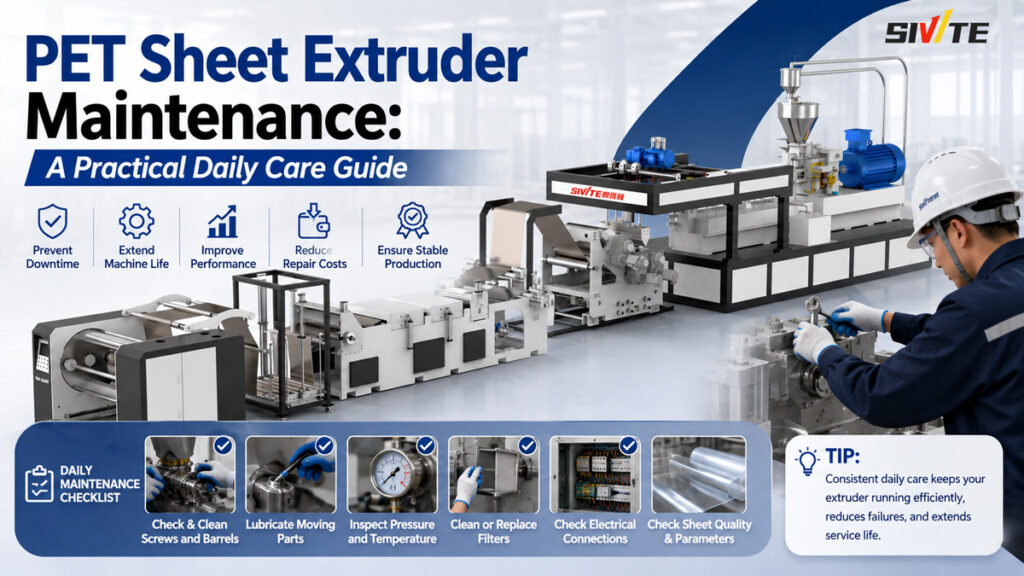
The real service life of a PET sheet extruder isn’t mainly determined by the equipment’s factory build quality — it’s determined by how consistently daily maintenance is carried out. The same model of machine can run reliably for 8-10 years or longer in a well-maintained factory, while a poorly maintained line may start experiencing frequent downtime, sheet defects, and rising energy costs within just 3-5 years. This article breaks down PET Sheet Extruder Maintenance into concrete actions you can execute daily, weekly, and monthly, helping you keep both equipment lifespan and sheet quality within a controllable range.
Why Daily Maintenance Matters More for PET Extruders
PET sheet extrusion is a high-temperature, continuous processing method, with melt temperatures typically running between 260-280°C. Equipment operating continuously under high heat and pressure means any overlooked detail can escalate into a bigger problem. For example, a partially clogged filter screen initially just raises melt pressure slightly — but left unaddressed, it can lead to abnormal screw load, motor overheating, and eventually forced downtime for repairs.
This is why more established practice in the industry is to break maintenance down into checks at different frequencies, rather than waiting for problems to appear before acting.
Daily Maintenance: Checks Before and After Every Shift
Pre-Startup Checks
Raw material drying status: Confirm the dryer is functioning normally and material moisture is below 50ppm, to prevent melt bubbles and unstable extrusion caused by excess moisture
Heating zone temperatures: Verify all screw heating zones and the die have reached their set points. Normal preheating typically takes 1.5-2 hours — skipping preheating and starting cold is one of the common causes of premature screw wear
Lubrication system oil level: Check that the gearbox and bearing housings are within the normal oil level range
Checks During and After Operation
Monitor the melt pressure gauge: Pressure should remain relatively stable during normal operation. A steady, gradual rise usually signals the filter screen is starting to clog and may need replacing
Clear residual material from the barrel and die at shutdown: This prevents material from degrading during prolonged high-temperature dwell time and forming carbonized deposits that are hard to remove — buildup over time affects the cleanliness of future sheet production
Weekly Maintenance: Often-Overlooked Items with Outsized Impact
This includes checking gearbox belt tension, coupling bolts, and whether barrel flange gaskets show signs of aging or leakage. A degraded gasket doesn’t just risk melt leakage — it can also let air enter the melt flow path, creating bubble defects in the sheet.
Weekly Maintenance: Often-Overlooked Items with Outsized Impact
This includes checking gearbox belt tension, coupling bolts, and whether barrel flange gaskets show signs of aging or leakage. A degraded gasket doesn’t just risk melt leakage — it can also let air enter the melt flow path, creating bubble defects in the sheet.
Weekly Maintenance: Often-Overlooked Items with Outsized Impact
1. Replacing or Cleaning the Filter Screen
This is the most underrated but most directly impactful item on this list. The melt filter screen’s job is to catch contaminants and unmelted particles. Over time, the mesh gradually clogs, causing melt pressure to keep rising. Left unaddressed, this can range from reduced sheet cleanliness to excessive screw load, motor trips, or even damage to the filter housing itself.
General recommendations:
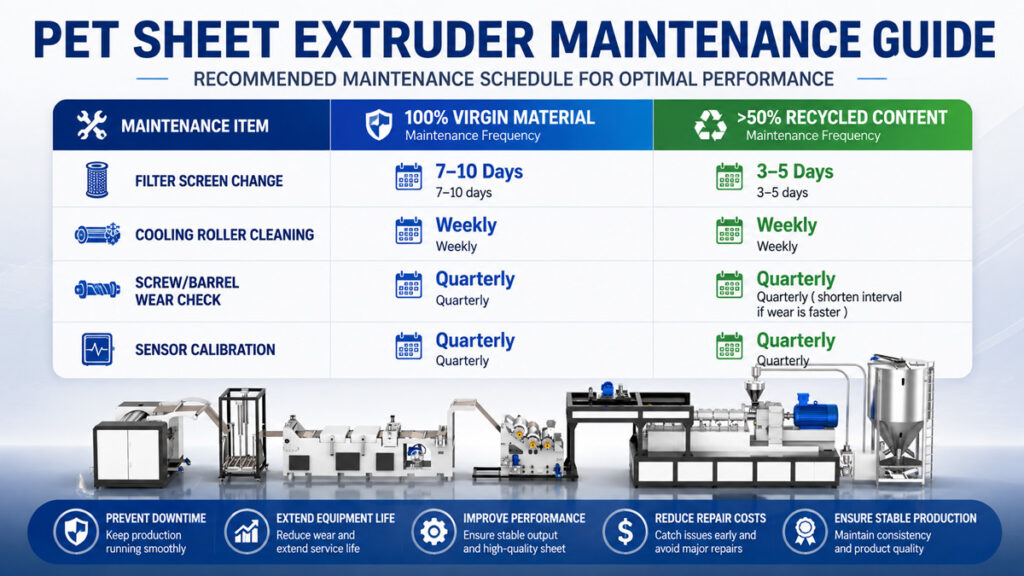
When processing 100% virgin material, filter screens can typically be changed every 7-10 days
When processing recycled material (especially at recycled content above 50%), contamination levels are much higher, so we recommend shortening the cycle to 3-5 days, adjusted dynamically based on actual pressure rise rate
If your equipment is fitted with an automatic screen changer, you can set a pressure threshold to trigger changes automatically, reducing human judgment error and avoiding production interruptions caused by delayed screen changes.
2. Inspecting Cooling Roller Surfaces and the Thickness Gauging System
Scratches or residue buildup on cooling roller surfaces show up directly as reduced sheet surface gloss. We recommend wiping the rollers weekly with a dedicated cleaning agent, avoiding metal tools that could cause scratches. Also check that the online thickness gauge’s sensor is clean and properly calibrated — recalibrate if readings deviate more than ±3%.
3. Checking Drive Components and Seals
This includes checking gearbox belt tension, coupling bolts, and whether barrel flange gaskets show signs of aging or leakage. A degraded gasket doesn’t just risk melt leakage — it can also let air enter the melt flow path, creating bubble defects in the sheet.
Maintenance Interval Reference Table
The intervals above are general industry reference points. Actual frequency should be adjusted dynamically based on real contamination levels, equipment operating hours, and pressure trend data.
Monthly and Quarterly Maintenance: Deep Checks for Long-Term Stability
Screw and Barrel Wear Inspection:
The clearance between the screw and barrel gradually increases with use. Excessive clearance causes more material backflow, directly reducing output and increasing energy consumption. We recommend quarterly measurement of screw outer diameter and barrel bore wear using proper tools. Under normal wear rates, twin screws typically last around 4-6 years, depending on the contamination level and hardness of the material processed.
Electrical System and Sensor Calibration:
This includes checking temperature control modules, pressure sensors, and inverter cooling fans for cleanliness and proper operation. Sensors can drift over long-term use, so we recommend a full calibration every quarter to prevent misjudged process parameters due to inaccurate temperature or pressure readings.